
The Best Power Supplies For Gaming in 2024
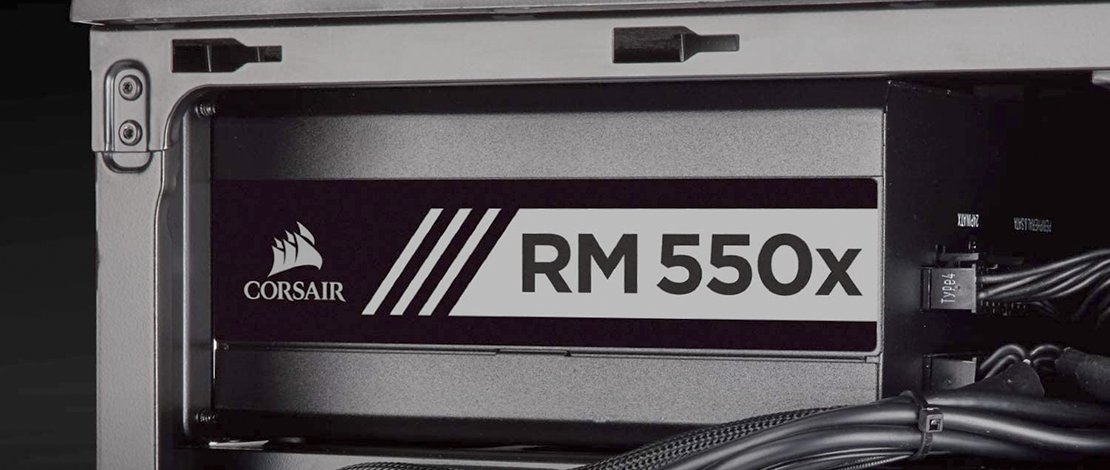
Power supply (PSU) is the most overlooked part of any build even though it’s the most important one. Choosing the best power supply for your needs might seem straightforward but there’s a lot to unwrap there.
The buying advice will come later. First, let us show you the best power supplies you can get right now, ranging from relatively humble 500W models to beasts offering 1600W of power. If you like our best power supply for gaming guide, you can check out our CPU for gaming and gaming motherboard guides. They’re also great. Let’s begin.
Best Gaming PSUs
Seasonic Focus GX-550
The PSU Choice for an Entry Level Build
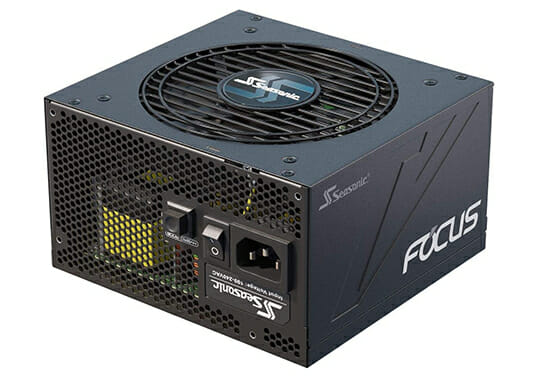
- 550W
- Fully modular unit
- 50.000 hours life expectancy
- 80 Plus Gold certified
Entry-level builds with components that do not have a high TDP do not require copious amounts of power, therefore, buying a 550W PSU is entirely acceptable and even recommended. Even though this is for a budget build you should not skimp on the PSU unit and get a good 80 Plus Gold certified unit that will perform reliably.
The Seasonic Focus GX-550 is an excellent recommendation in this category since this is a reliable 12V ATX unit that can power and protect your components. This is a fully modular unit which means reduced clutter and cable management are needed so you can run only the cables you need for your build. Since this is a Seasonic product you can expect 50.000 hours of work out of it and you also get 10 years of warranty. Overall a very solid and reliable PSU.
- Seasonic is a very well-known reputable brand that makes reliable PSUs
- 80 Plus Gold certification ensures the efficiency of the PSU
- Full modularity gives you a lot of flexibility when building your PC
- 10 years of warranty in case something does go wrong
- You will have to spend 100$ on a PSU (which is still recommended since buying a cheap PSU can result in PC failure or damage)
MSI MPG Series A650GF
Good Quality Modular Power Supply
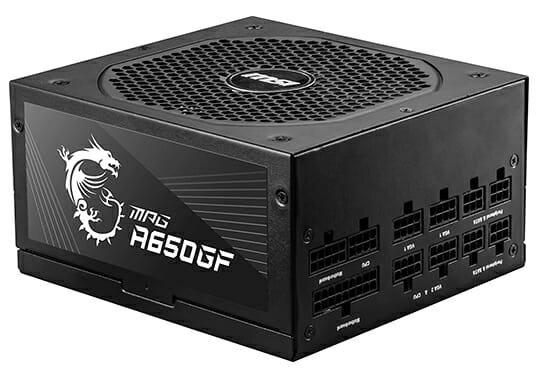
- 650W+
- 80 Plus Gold Certified
- Fully modular
- 100% Japanese 105°C capacitors
A good PC build will always include a good PSU unit that will be able to feed your components enough power to keep the system running without failure. The MSI MPG A650GF is one of these reputable power supply units that can ensure the smooth operation of your system.
The MSI MPG A650GF comes in many capacities but the one we are looking at currently is the 650W model, which is enough to power most medium-ranged builds. The PSU is 80 Plus Gold Certified which means you will have lower energy consumption and higher energy efficiency.
Besides the 80 Plus Gold certification, the MPG A650GF is also a fully modular power supply which is a great feature for cable management and keeping your build clean. The cables included with the MSI PSU are flat and easy to route through your build.
One of the big selling points of this PSU, in particular, is that it uses 100% Japanese 105°C capacitors that are not only durable but also highly efficient.
- Highly efficient because of the 80 Plus Gold certification
- Good build quality with Japanese internals
- The modular design makes it easy to install and manage cables
- 10-year warranty
- The flat cables although flat are pretty stiff and cheap feeling
Corsair RM750x
A Staple PSU in PC Building
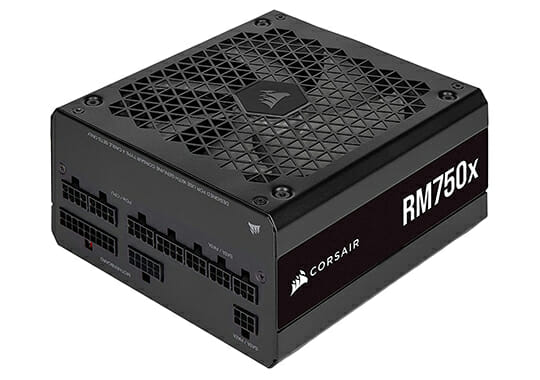
- 750W
- 100% Japanese capacitors
- Fully modular
- 80 Plus Gold certified
There is a reason a lot of people building their PCs will use a Corsair power supply, and that reason is the reliability provided by a good product. The RM series PSU units from Corsair have historically been one of the most popular purchases amongst builders and the RM750x is no exception.
This is a fully modular, 750W, 80 Plus Gold certified unit with the highest quality components. To ensure consistent power Corsair uses 100% Japanese capacitors rated for 105°C. The PSU also has 90% or more peak efficiency while also producing less heat and noise during operation due to the 0 RPM fan mode.
To complete the package Corsair includes a 10-year warranty giving you great piece of mind that the PSU you used in your build is a rock-solid purchase.
- The most popular and reliable line of PSUs
- 100% Japanese capacitors are a lot more reliable than capacitors made in Taiwan used in other PSUs
- Full modularity is a given at this point
- 10 years of warranty
- The RM750x might be confused with the RM750 which uses lower-tier Taiwanese capacitors – always get the x version for a couple more bucks
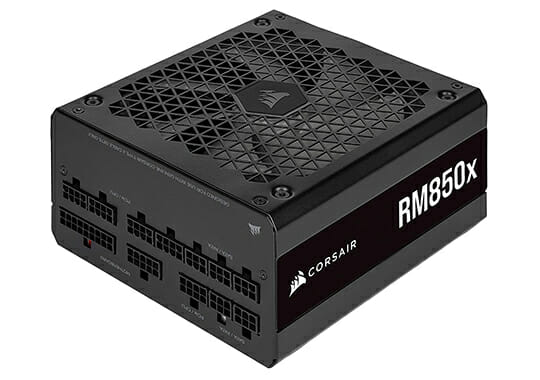
Corsair RM850x
The Best Sub-1000W PSU Choice
- 850W
- 80 Plus Gold certified
- Fully modular unit
- 105°C rated 100% Japanese capacitors
A decent build with fairly power-hungry components needs a good power supply that would allow for overclocking while still ensuring the safety of your components from power spikes and overvoltage. If you don’t quite need 1000W yet the Corsair RM850x is the perfect 850W PSU choice for your needs.
This is a fully modular, 80 Plus Gold certified power supply that essentially lacks nothing. The cooling is done by a 135mm mag-lev fan which ensures stable 90%+ peak efficiency for the PSU. Just like every other RMx PSU from Corsair, the 850W option uses 105°C rated 100% Japanese capacitors for reliable performance.
In essence, the RM850x is not only efficient and reliable but also silent with good noise levels that will allow you to enjoy a silent environment even under load.
- Extremely reliable and efficient PSU
- Almost dead silent during operation
- Full modularity allows for easier cable management
- You will probably never need the 10-year warranty
- The naming scheme might be confusing for certain people – always opt for the RMx, not the RM series because of the higher build quality
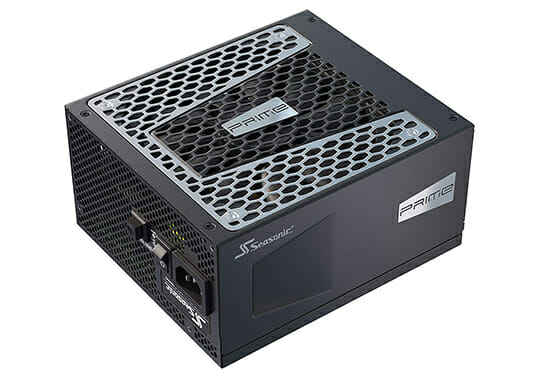
Seasonic Prime TX-1000
The Big Guns Come Out
- 1000W
- 0.5% micro tolerance load regulation
- 80 Plus Titanium certified
- 12 years of warranty
If you are considering a Seasonic Prime TX-1000 PSU for your build it means you aren’t quite at the stage of using LN2 for extreme overclocking but are building a top-spec PC with the highest, most power-demanding components on the current market.
This is an 80 Plus Titanium certified PSU with 12 years of warranty that pushes 1000W with a 0.5% load regulation (very tight range) allowing for extremely stable and reliable power delivery to your system. If this doesn’t exactly mean much to you, all you need to understand is that this is an extremely reliable PSU that can power very high-end systems that are overclocked and need very little variance in their power delivery for optimal performance.
The PSU also comes with standard commodities such as full modularity and hybrid fan control that allow for an easier time during building and silent operation during high loads. Seasonic is a household name in the PSU industry for a reason and this product shows why the situation will not change any time soon.
- 1000W PSU that uses premium components
- 80 Plus Titanium certification is something not all PSUs can get
- 0.5% variance in the load regulation is an extremely tight parameter
- 12 years of warranty shows how confident Seasonic is with the reliability of this PSU
- If you want 1000W of power to be delivered efficiently and reliably to your system you need to be ready to cash out 300+$
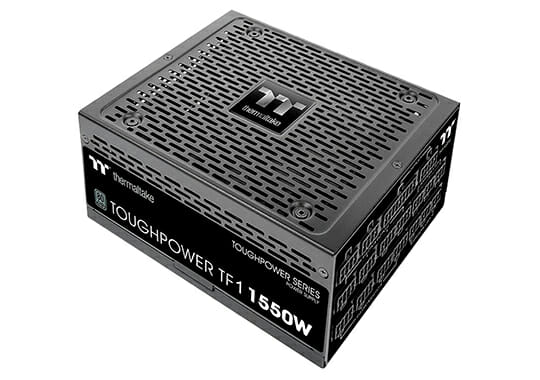
Thermaltake Toughpower TF1 1550W
End-Game PSU
- 1550W
- 80 Plus Titanium Certified
- Japanese 105°C capacitors
- Fully modular
If you ever get to the point where you are looking at the Thermaltake Toughpower GF1 and you are thinking to yourself that you need 1550W for your system, then you are in the end-game. These types of systems are basically ALWAYS dual RTX 3090s or dual Threadripper CPUs, or some other type of crazy configuration that simply needs A LOT of power to operate normally.
This is why looking at the 1550W makes sense since if you have that type of build planned money is not an issue. Obviously, this PSU has an 80 Plus Titanium rating for efficiency since it needs to be pushing that much wattage around.
This PSU needs to satisfy the needs of crazy overclockers and enthusiast-grade builds so it has a very low 30mV ripple noise, extremely strict voltage regulation, and hold-up times of around 16 milliseconds. Add the high-quality Japanese 105°C capacitors and you understand why this is considered to be a highly-stable, highly-durable power supply.
This mammoth of a power supply also is fully modular, has an anti-vibration mounting system, side ventilation, and a turbo fan button.
- End-game PSU that can do ANYTHING
- Extremely stable and durable
- Insane 1550W capacity with a Titanium efficiency rating
- This PSU is made for crazy overclocks or insanely high-end system
- It is no surprise that this type of PSU costs 500$
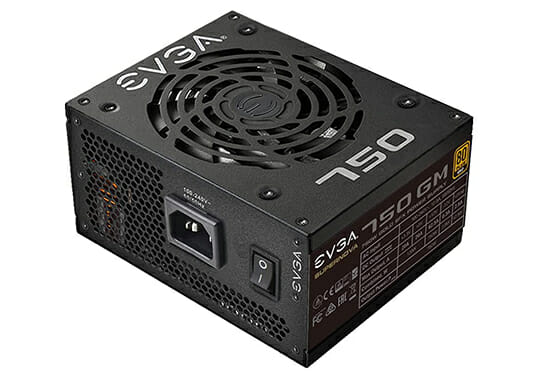
EVGA SuperNOVA 750 GM
For Compact PC Builds
- 750W
- SFX form factor
- 80 Plus Gold certified
- Fully modular
Not everyone wants to build a full ATX PC but all PC configs need a PSU, so to cater to this group of people that need smaller form factor power supply units, EVGA created the SuperNOVA 750 GM.
This is a 750W, 80 Plus Gold certified, SFX form factor PSU that uses Japanese capacitors to ensure reliability during loads. Since this is intended to go in a PC that has space limitations, the PSU is fully modular to accommodate routing your cables easier, and a fluid dynamic bearing fan to keep your build silent.
The PSU comes with a 10-year warranty, but considering the track record of EVGA and its overall quality when releasing products, this PSU can outlive its warranty in most cases.
- Small but mighty and built with quality components
- Full modularity is even more important in a small form factor build
- Has smart features like auto ECO mode to lower the noise levels
- Is reliable even with power-hungry components that are tucked away in a small case
- SFX power supplies will generally cost a bit more since the manufacturer needs to cram a lot of parts in a smaller shell
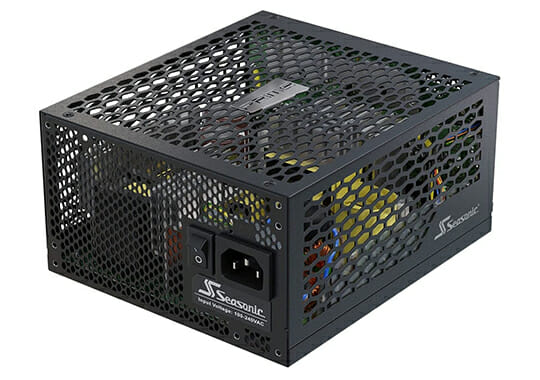
Seasonic Prime 700 Fanless TX
Extremely Reliable Fanless PSU
- 700W
- 80 Plus Titanium Certified
- Fully modular
- Fanless design
If you are building a high-end ultra-quiet system then you cannot forget that the PSU is also a source of fan noise. To ensure that this does not become a problem for your specific build you should invest in a fanless PSU.
One of the best options for this purpose-built system would be a Seasonic Prime Fanless TX PSU. As expected from any Seasonic power supplies the quality of this product is extremely high ensuring the proper operation of your PSU and other components even without needing a fan.
This specific unit is 700W and is 80 Plus Titanium which means it is even more efficient than Gold rated PSUs. This is the main reason this specific unit can run without a fan – since less energy is wasted, less heat is produced, therefore, the fan is not necessary.
The Seasonic Prime 700 Fanless TX is also impressive because it has micro tolerance load regulation that ensures a great deal of stability therefore can be used even in high-performance systems that will be under heavy loads.
The cherry on top is the fact that this PSU is fully modular and allows you to get rid of extra cable clutter.
- An extremely high-quality PSU
- Fanless operation for extra quiet systems
- Seasonic offers a 12-year warranty
- The 80 Plus Titanium Efficiency will ensure that the PSU is cool even without a fan
- Silence is costly since the PSU is around 300$
How To Choose A Power Supply
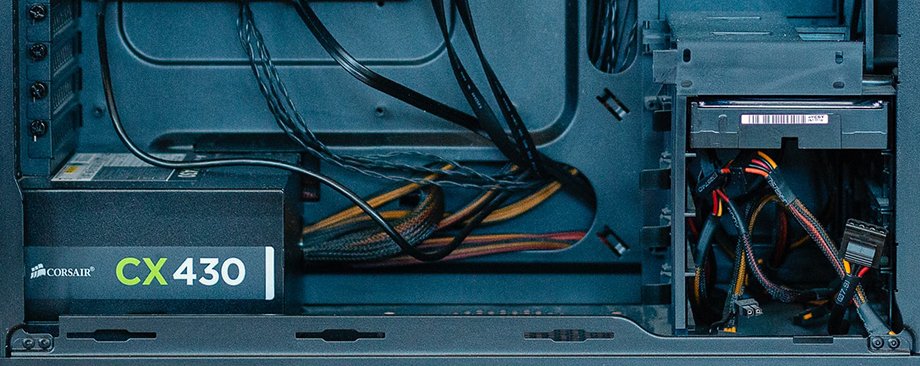
Yes, picking a power supply is as exciting as watching paint dry. But you’ll have to consider several things before you find the perfect power supply for your needs. The road to the best power supply is relatively short but it features a couple of nasty potholes you should avoid.
Calculate The Power Output You Need
This is the first thing you should do. You need to have a clear picture of how much power you need. The OuterVision Power Supply Calculator is an excellent PSU calculator that offers a wide selection of components. Once you calculate how much power you need, add about 50 W more, just in case.
Make Sure To Include Future Upgrades
PSU isn’t a component we change regularly so it’s best to include future upgrades into your power calculation. Because chances are, you’ll have the same PSU for years and years.
The best way to do this is to select CPU and GPU that use more power than your current choices, to introduce a couple extra SSDs to the calculation, to add more RAM sticks. You get it.
Continuous Power Isn’t The Same As Peak Power
Most PSU manufacturers advertise peak power as their rated power. For instance, a 500 W PSU is capable of providing a peak power of 500 watts but only for a short duration. Its continuous power is probably around 450 W.
This is why it’s important to get a power supply that is capable of delivering more power than you need. If you need, for instance, 400 watts of power go for at least 500 W PSU.
Make Sure That The PSU Has 80 Plus Certification
The 80 Plus certification program is the most popular way to rate PSU efficiency. If a PSU doesn’t have at least 80 Plus Bronze certificate, don’t even consider it. The great middle-ground are power supplies with 80 Plus Gold certification.
Those with 80 Plus Platinum stamp are extremely efficient. And, to be honest, the 80 Plus Titanium rating is mostly for bragging rights. You don’t actually need something as efficient as that. Below you can find the full 80 Plus rating system:
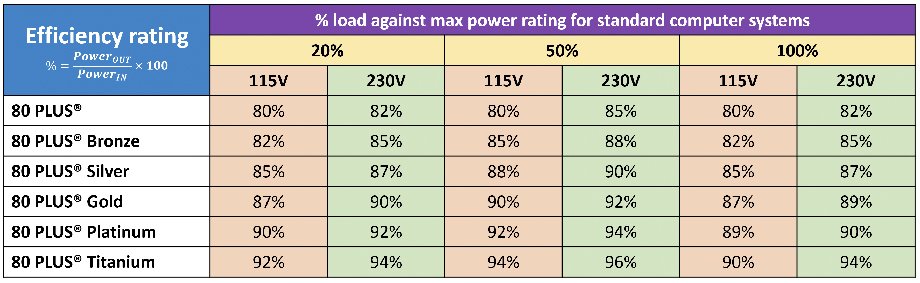
Image Source: TechSpot
Make Sure The PSU Fits Inside Your Case
Not all PSUs measure the same. There are 2 main form factors: ATX and SFX. An ATX PSU should fit inside all mid, mATX, and full tower cases. SFX form factor is made for small form factor (m-ITX) machines. Remember that if you want to build a small form factor PC.
SFX power supplies can fit into regular PC cases but this isn’t recommended. Their cables are shorter and you won’t be able to reach your components if you place a SFX PSU into a regular case.
Finally, Make Sure The PSU Has All Connectors You Need
The last thing you should consider are connectors found on the PSU. You should find all connectors listed in official specs of any PSU. Your motherboard needs either a 20-pin or 24-pin connector. Your CPU power connector comes in 4-pin and 8-pin flavors.
The graphics card is using 6-pin and 8-pin connectors. Finally, there are 4-pin Molex connectors and SATA power connectors. Remember that you can use splitters to connect additional components, just remember to not go above your PSU power limit.
Shame you didn’t mention compatibility with UPS’ with a simulated sine wave. Some active power factor correction PSUs work well, others don’t